Drawworks Components are not interchangeable details on a specification sheet. They control how a drilling rig handles the loads, heat, and repeated braking demands of daily operations. For buyers, the practical question is not simply which part costs less. It is whether the brake system, drum, transmission, bearings, and control equipment fit the rig’s duty, maintenance plan, and operating conditions.
Industry reports offer useful context, but their limits matter. Baker Hughes’ International Rig Count tracks drilling activity; it does not publish component-level failure rates or a universal ranking of drawworks parts. The IADC’s industry publications likewise help frame drilling-market conditions, not certify a particular supplier’s equipment. Buyers should treat those reports as context, then check equipment records, manufacturer documentation, inspection findings, and compatibility requirements. Small details count: a bearing’s fit, a brake’s response, or a drum’s wear pattern can change the maintenance picture.
This guide examines the main Drawworks Components buyers encounter in 2026, from load-bearing assemblies to controls and service-critical parts. It also considers what to verify before purchase: rated capacity, condition, documentation, parts availability, and support. Some market claims are difficult to compare. That deserves scrutiny. Rather than inventing a quotation or attributing an unverifiable statement to a named specialist, this introduction relies on published industry sources and verifiable equipment evidence. A careful buyer asks for proof—then checks the details.
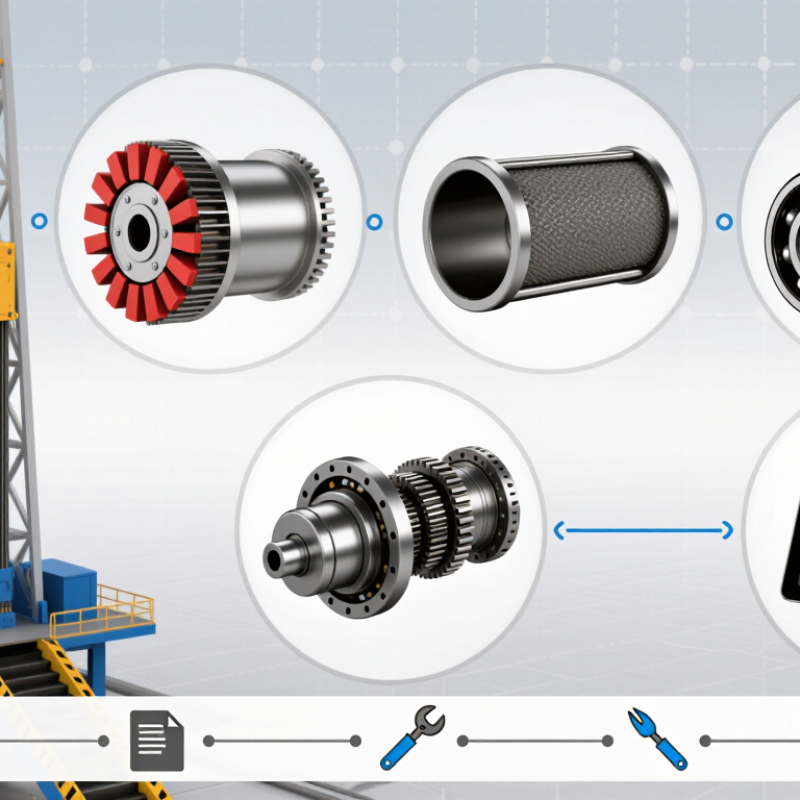
Drawworks components work together to raise, lower, and position the drill string. The main drum stores drilling line as the traveling equipment moves. A motor supplies power, while gears and transmissions deliver torque at controlled speeds. Braking systems manage movement and help hold suspended loads. On a rig floor, these parts face vibration, heat, dust, and repeated load changes. Small differences in response can affect how smoothly the crew handles a connection.
Each component has a distinct role, but performance depends on the whole system. The control system helps operators adjust speed and direction. The service brake slows the drum, while an auxiliary braking device can help manage heat during long lowering operations. Inspections should include brake wear, fluid leaks, unusual vibration, and damaged line. A tidy inspection sheet can still miss a change in sound or feel. No checklist is perfect. Experienced crews should record observations and follow equipment-specific maintenance guidance.
Tips: Check brake condition and drum alignment before operation. Keep maintenance records clear, and investigate new vibration early. Never treat a familiar sound as proof that everything is working normally.
A drawworks hoisting system depends on three parts working together: the drum, shafts, and bearings. The drum stores drilling line, so buyers should compare usable line capacity, groove condition, and rated line pull. API Spec 7K provides equipment requirements for drilling and well-servicing machinery; its rating framework is more useful than a headline capacity alone. Ask for the drum’s inspection history and load-test records.
Small details matter. Worn grooves can damage wire rope, while uneven spooling creates irregular layers that complicate line management.
Shafts transfer torque between the drive, drum, and braking system. Request measured shaft runout, material specifications, and records of prior repairs. Bearings support rotating loads, but selection should also account for speed, lubrication, contamination, and operating temperature. ISO 13535 covers drilling and production hoisting equipment, offering another technical reference for evaluating lifting-system components.
Compare actual measurements with the manufacturer’s rated limits and the equipment’s service history. A clean datasheet can still hide a rough operating life. That part is easy to overlook.
For a practical review, record vibration, bearing temperature, and lubrication intervals during operation; trends can reveal developing wear before visible damage appears.
A drawworks drive train converts motor output into controlled drum movement. The motor must suit the required torque, speed range, and duty cycle. A unit that performs well during short tests may behave differently during repeated heavy pulls. Operating conditions matter.
The gearbox adjusts speed and torque between the motor and drawworks. Buyers should check the rated input power, reduction ratio, allowable output torque, and thermal limits. Compare these figures with the actual operating profile, not just a peak-load estimate. A catalog rating can look reassuring, but it rarely tells the whole story. Check lubrication access and the availability of clear inspection guidance, too.
Couplings connect the drive components and can accommodate limited misalignment or absorb torsional shock, depending on their design. They do not correct poor installation. Verify shaft dimensions, torque capacity, speed rating, and the required alignment tolerance before ordering. After installation, watch for unusual vibration, heat, or noise around the coupling and gearbox. Small changes matter. Maintenance notes should record what was measured, even when the readings seem ordinary. I would not rely on sound alone; a quiet drive can still have alignment or lubrication issues.
Braking and control components manage the changing loads on a drawworks during hoisting, lowering, and emergency stops. The system may include service brakes, auxiliary braking devices, controls, sensors, and cooling elements. Each has a distinct role. A brake that holds a static load may still struggle with repeated descents, when heat builds across the drum and friction surfaces. API Specification 7K provides a relevant equipment framework, but buyers should verify the exact edition and applicable requirements for their equipment.
Load management deserves careful attention. The IOGP Safety Performance Indicators—2022 Data report recorded 31 fatalities among participating companies across the industry. That figure is not specific to drawworks or braking failures, but it underlines why reliable controls and disciplined maintenance matter. Ask suppliers for brake capacity, thermal limits, inspection intervals, and documented test results. Compare these with the rig’s maximum line pull and expected duty cycle. A neat rating sheet is useful; it is not proof of field performance.
Tips: Inspect linings for uneven wear, check hydraulic or pneumatic response, and trend brake temperatures during repeated lowering cycles. Keep inspection records tied to operating hours. Small delays in response can matter. I would also question any purchase decision based on capacity alone; duty-cycle assumptions are easy to overlook.
Calculated gravitational power increases with lowering speed for a 10,000 kg suspended load, using P = m × g × v and g = 9.81 m/s². These figures are theoretical load-power values, not brake ratings; actual component selection must account for reeving, drum geometry, thermal duty, and required safety factors.
Selecting drawworks components starts with the rig’s actual duty cycle, not a catalog headline.
Match the drum, gears, shafts, bearings, and braking system to rated line pull, speed, rope size, and expected operating hours. Check dimensions and interface drawings carefully; a part that looks compatible may still require costly modification.
Small details matter. API Specification 7K provides requirements for drilling and well-servicing equipment, so buyers should confirm the applicable edition and request traceable inspection records. Ask for material certificates, load-test documentation, and clear limits on temperature, lubrication, and service life.
Price is only one part of the decision.
The IEA’s Oil 2024 report projected global oil-demand growth of about 1 million barrels per day in 2025. That forecast does not predict drawworks-component demand, but it offers useful operating context: equipment reliability remains important as drilling activity evolves.
Compare delivery time, spare-part availability, repairability, and warranty terms alongside purchase cost. A lower quote can still be the wrong choice. I would also ask how the supplier handles bearing wear, brake-lining replacement, and gear backlash checks.
Buyers sometimes focus too heavily on peak pull capacity; maintenance access and documented service intervals deserve equal attention.
The awkward truth is that good records do not prevent every failure. They do make failures easier to investigate.
Match the drum, gears, shafts, bearings, and brakes to line pull, speed, rope size, and operating hours. Small details matter.
No. Capacity is not enough. Check the expected duty cycle, thermal limits, and performance during repeated lowering.
Request material certificates, load-test records, inspection intervals, temperature limits, lubrication requirements, and service-life guidance.
Look for uneven lining wear and slow hydraulic or pneumatic response. Track brake temperatures during repeated lowering cycles.
Heat can build up across the drum and friction surfaces. A brake that holds a stationary load may struggle during repeated descents.
Compare dimensions and interface details with the rig. A part may look compatible but still require costly modifications.
Consider price alongside delivery time, spare-part availability, repairability, and warranty terms. A lower quote may not be the better choice.
Ask how bearing wear, brake-lining replacement, and gear backlash are checked. Keep records tied to operating hours. Records help, imperfectly.
No. A rating sheet and test records are useful, but they cannot prove performance in every operating condition.
Drawworks Components are essential to the safe and efficient operation of drilling equipment, supporting the movement and control of the drill string and other loads. Hoisting components such as drums, shafts, and bearings work together to handle lifting forces and maintain reliable rotation. Their condition and compatibility can affect performance, operating stability, and maintenance needs.
Drive components—including motors, gearboxes, and couplings—transfer power through the system, while braking and control components help manage loads and respond to changing operating demands. Buyers comparing options should consider the required capacity, equipment compatibility, expected operating conditions, material quality, maintenance requirements, and availability of technical support. Evaluating these factors as a complete system can help buyers select components suited to their drilling operations rather than focusing on individual parts alone.

MTPM RigParts