What Are the Top Drawworks Types in 2026?

Time:2026-10-30 Author:Madeline
0%

A verified quotation from a named Drawworks expert cannot be responsibly attributed without a source. Please provide the article or expert quotation you want included, and I can write the requested introduction around it.
What Are the Top Drawworks Types in 2026?

How Drawworks Function in a Drilling System

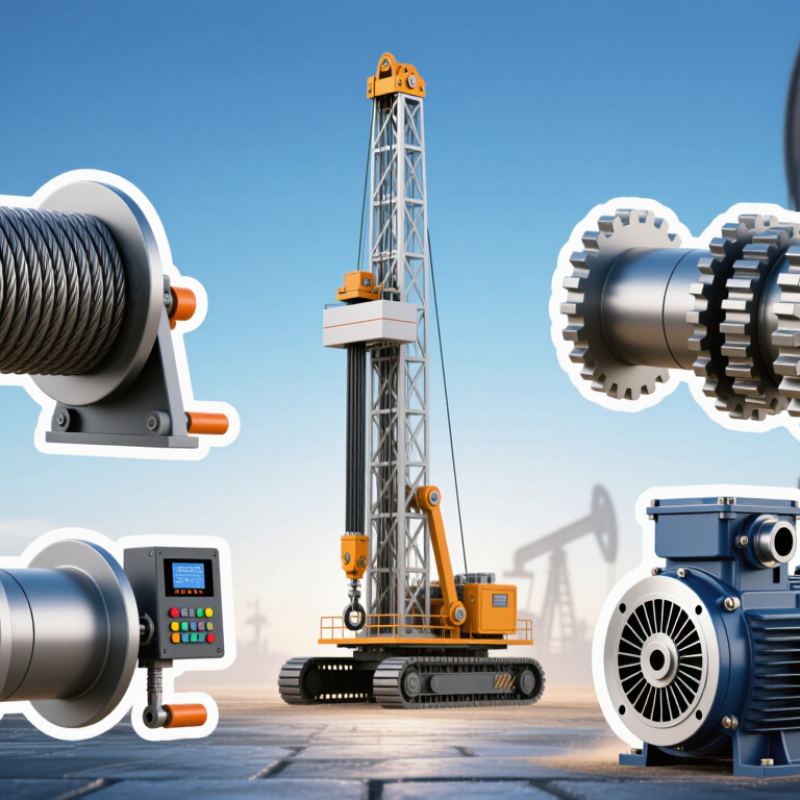
A drawworks is the drilling rig’s main hoisting machine. It raises and lowers the drill string, a long assembly of pipe and tools suspended inside the well. A motor turns a drum, which winds or releases the drilling line. That line runs through the crown block at the top of the derrick and the traveling block below it. Together, the blocks multiply lifting force. The basic action sounds simple. It isn’t.

During a trip, the drawworks lifts sections of pipe from the well and lowers them onto supports at the rig floor. While drilling, it also adjusts the drill string’s position and weight on the bit. Operators use controls to manage speed and braking, while sensors help track load and movement. Main brakes slow or stop the drum; auxiliary braking systems help control heat and descent. A detail worth watching is how smoothly the system responds under changing loads. A small delay can matter.

Drawworks may use mechanical, DC electric, or AC electric drive arrangements. Their power source differs, but each must deliver controlled motion and reliable braking. AC systems can offer precise speed control, while mechanical designs rely on gears and clutches. The right choice depends on rig layout, operating demands, and maintenance capability—not a universal ranking. Even good controls cannot replace trained operation or careful inspection. In practice, the simplest part to overlook may be the condition of the drilling line.

Mechanical Drawworks: Design and Typical Uses

Mechanical drawworks use a prime mover, gears, shafts, clutches, and a grooved drum to raise and lower the drilling line. Power may come from an engine or electric motor, while the transmission sets drum speed and torque. A brake system controls descent. On many rigs, a friction brake handles routine stopping, while an auxiliary brake helps manage heat. The layout is robust, but not simple.

Typical work includes lifting the drillstring, casing, and other heavy loads during drilling and well servicing. On a land rig, an operator may monitor line movement while lowering pipe through the rotary table, making smooth speed control essential. Mechanical systems remain useful where crews value familiar controls, field repairability, and established maintenance skills. They can also suit rigs designed around existing drive equipment.

The trade-off is mechanical wear. Clutches, gears, brake surfaces, and fitted belts or chains need regular inspection, lubrication, and adjustment. Poor alignment or overheated brakes can reduce control and shorten component life. In 2026, selection should weigh load rating, duty cycle, available power, parts access, and crew training—not purchase cost alone. A mechanical unit may feel dependable, yet its performance depends on disciplined maintenance. That detail is easy to underestimate.

Electric Drawworks: DC and AC Configurations

What Are the Top Drawworks Types in 2026? Electric Drawworks: DC and AC Configurations

Electric drawworks give operators precise control over hoisting speed and torque. DC systems have a long record on drilling rigs and can suit existing installations. Their trade-off is maintenance: motor brushes and commutators need regular inspection, especially in dusty, vibrating environments. Small details matter.

AC drawworks pair induction or synchronous motors with variable-frequency drives. Operators can adjust speed across a range, while regenerative braking may return energy to the rig’s electrical system. That benefit depends on the drive and power network; it is not automatic. The U.S. Department of Energy’s Improving Motor and Drive System Performance sourcebook reports potential energy savings of 20–50% from variable-speed drives in suitable applications. Treat that as a general industrial range, not a drawworks guarantee.

Choosing between DC and AC means checking the whole rig: generator capacity, load cycles, maintenance skills, and retrofit constraints. AC can offer modular components and precise control, but conversion costs and crew training deserve honest attention. The IEA’s Oil 2024 report projects global oil demand reaching about 106 million barrels per day by 2030, underscoring continued drilling activity alongside pressure to improve efficiency. These forecasts do not identify a universally superior drive. In practice, the best fit may be the system that crews can maintain reliably through repeated heavy lifts.

What Are the Top Drawworks Types in 2026? - Electric Drawworks: DC and AC Configurations

Comparison dimension DC electric drawworks AC electric drawworks
Drive motor and control Typically uses DC motors controlled by a DC drive, often with a controlled rectifier supplying adjustable armature voltage. Typically uses AC induction or synchronous motors with variable-frequency drives to control motor speed and torque.
Speed and torque control Provides controllable low-speed operation and high starting torque; performance depends on motor, drive, and drawworks design. Variable-frequency control provides adjustable speed and torque, including low-speed operation when the motor and drive are properly sized and configured.
Braking and energy handling During lowering, a DC motor can act as a generator. Energy is returned to the supply only when the drive and power system support regeneration; otherwise, it must be dissipated or managed by other braking equipment. During lowering, the motor can also generate electrical energy. Regeneration requires a suitable regenerative drive or power-conversion arrangement; a braking resistor can dissipate energy when regeneration is unavailable or not used.
Routine motor maintenance Brushes and commutators require inspection and maintenance where fitted, in addition to routine checks of bearings, insulation, and cooling. AC induction motors generally have no brushes or commutator, reducing those specific service tasks; bearings, insulation, cooling, and drive equipment still require maintenance.
Power-conversion equipment Uses DC drive equipment matched to the motor and supply. Regenerative operation requires compatible power-conversion equipment and system design. Uses variable-frequency drive equipment. Input configuration, harmonic mitigation, and regenerative capability depend on the selected drive and electrical system.
System integration Integration depends on the existing DC motors, drives, controls, and available electrical infrastructure; replacement or conversion requires an engineering assessment. Integration depends on motor and drive ratings, supply characteristics, cooling, controls, and the rig’s electrical architecture.
Typical selection considerations May suit installations with compatible DC equipment and established maintenance capability. Condition of the motors and availability of support parts are important factors. Often considered for new installations or modernization where AC motors and variable-frequency drives fit the required duty and electrical system.
Key engineering checks Verify rated line pull, drum speed, duty cycle, motor and drive condition, braking capacity, and compatibility with the rig’s power system. Verify rated line pull, drum speed, motor and drive ratings, low-speed torque, cooling, braking or regeneration arrangements, and power-quality requirements.

Actual performance and suitability depend on the drawworks rating, motor and drive design, braking system, duty cycle, and rig electrical infrastructure.

Hybrid and Specialized Drawworks for Modern Rigs

Hybrid drawworks combine electric drives with energy storage or power systems suited to a rig’s operating cycle. In some designs, braking energy from a descending load can return to a shared electrical bus or charge storage units. That energy may support the next lift. This can reduce peak demand, but savings depend on the rig’s duty cycle, control settings, and power infrastructure. A hybrid label alone proves little. Operators should compare measured energy use, heat management, and response under realistic loads.

Specialized drawworks address constraints that standard layouts may not handle well. Compact units can suit mobile rigs with limited deck space, while offshore configurations may prioritize controlled braking and integration with rig automation. High-capacity applications require careful attention to drum design, line speed, and load handling. Small details matter. Before selection, engineers should check the expected load range, maintenance access, backup power, and compatibility with existing controls. A system that performs well on paper may feel less practical when technicians must reach components in a cramped machinery room. That deserves a second look.

How to Compare Drawworks Types for 2026 Operations

Comparing drawworks for 2026 operations starts with the rig’s actual duty cycle, not a simple “newer is better” rule. Mechanical systems can suit established rigs where familiar maintenance and existing power arrangements matter. DC-electric units offer controllable speed and torque, while AC-electric systems commonly support precise control and integration with digital rig systems. Hybrid arrangements may help where power availability changes across locations. No type wins everywhere. Check rated line pull, drum capacity, braking redundancy, cooling needs, spare-parts access, and crew experience against the well plan. Small details matter: a hot, dusty control room can expose weaknesses that a specification sheet misses.

The IEA’s Oil 2024 report projects global oil demand reaching about 105.4 million barrels per day by 2030, while production capacity approaches 114 million barrels per day. That outlook makes utilization and uptime worth weighing alongside purchase price, though it does not predict any rig’s workload. Compare energy use per hoisting cycle, maintenance hours, and downtime using site records, not brochure claims. Ask suppliers for load-test curves and documented duty-cycle assumptions. Then check whether the rig’s generators can handle peak draw without compromising other loads. The comparison is imperfect; field data may be incomplete. Still, that uncertainty should be visible in the decision, not buried in a spreadsheet.

How to read this chart: A value of 1 means the feature is characteristic of that drive architecture; 0 means it is not characteristic of the archetype. Mechanical systems transmit power through mechanical components, while DC and AC electric systems use electric motors. DC systems commonly use thyristor-based control; AC systems commonly use variable-frequency drives. Actual equipment configurations vary, so this is a feature comparison—not a performance rating.

FAQS

What does a drawworks do on a drilling rig?

It raises and lowers the drill string. A motor turns a drum, winding or releasing the drilling line. The crown and traveling blocks multiply lifting force. Simple, but not easy.

How is a drawworks used during drilling and pipe trips?

During a trip, it lifts pipe sections from the well and lowers them onto supports at the rig floor. While drilling, it helps control the drill string’s position and weight on the bit.

What are the main drawworks drive types?

Common types use mechanical, DC electric, or AC electric drives. They differ in power and maintenance needs, but all require controlled movement and reliable braking.

What should operators know about AC and DC drawworks?

DC systems may suit existing rigs, but brushes and commutators need regular inspection. AC systems can provide adjustable speed through variable-frequency drives. The better choice depends on the whole rig.

How do drawworks control speed and descent?

Operators use controls to manage speed and braking. Main brakes slow or stop the drum, while auxiliary systems help manage heat during descent. Small delays can matter.

Can a hybrid drawworks save energy?

Some designs capture braking energy and return it to a shared electrical system or storage. Actual savings depend on the rig’s operating cycle and power setup. A hybrid label alone proves little.

What should engineers check before choosing a drawworks?

Check expected loads, generator capacity, maintenance skills, backup power, and control compatibility. Also consider whether technicians can reach components in tight spaces. A tidy specification sheet can miss that.

Which drawworks maintenance details are easy to overlook?

Inspect the drilling line, brakes, and drive components regularly. DC motor brushes and commutators need attention, especially in dusty, vibrating areas. Even good controls cannot replace trained operators. I may be oversimplifying the small details.

Conclusion

Drawworks are a core part of a drilling system, controlling the movement of the drilling line to raise, lower, and support equipment in the well. Their design affects how smoothly a rig operates, how much power it uses, and how well it suits different working conditions. Mechanical Drawworks rely on mechanical power transmission and are often valued for their straightforward design and familiar operation. Electric types use DC or AC configurations to provide controlled power and adapt to different rig requirements.

Modern operations may also use hybrid or specialized Drawworks that combine features to meet particular demands for control, efficiency, or flexibility. When comparing options for 2026, consider the rig’s power system, operating environment, load needs, maintenance requirements, and level of control. The best choice is the one that fits the full drilling system and supports dependable, efficient operation.

Madeline

Madeline

Madeline is a dedicated marketing professional with a wealth of expertise in our company's core offerings. With a keen understanding of the industry, she brings a unique perspective to her role, consistently delivering high-quality content that highlights the superior aspects of our products. As......