In heavy-duty industries such as oil and gas exploration, marine hoisting, and construction crane machinery, the hoisting system represents the critical path for safe and efficient operations. Among the core elements of these assemblies are the crown blocks and traveling blocks, which depend on highly specialized sheaves to redirect and distribute structural loads. The design of these sheaves has shifted from traditional sleeve bearings to advanced Ball Bearing Sheaves and tapered roller assemblies. This evolution is driven by the demand for higher rotational efficiency, reduced maintenance intervals, and the prevention of catastrophic failures.
Historically, plain bronze bushings were standard for heavy industrial sheaves. However, high radial forces and harsh ambient conditions often led to lubrication breakdown, resulting in rapid bore wear and grooving misalignment. The modern integration of precision ball bearings and tapered roller bearings solves this challenge. By translating sliding friction into rolling resistance, these components minimize operational drag, allowing crown and traveling blocks to handle severe static and dynamic hoisting loads with minimal mechanical loss.
By introducing rolling-element bearings, ball bearing sheaves dramatically decrease the starting and running torque required by drawworks systems, resulting in reduced energy draw and longer wire rope life.
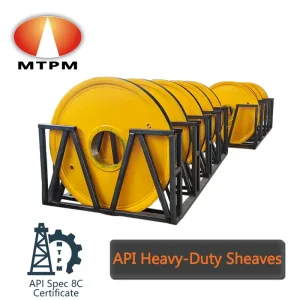
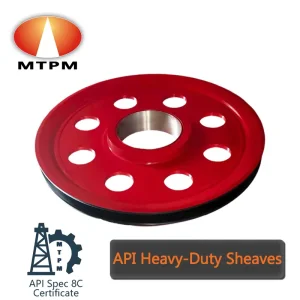
Heavy-duty hoisting blocks require strict compliance with international manufacturing certifications. API Spec 8C sets the global benchmark for load verification, nondestructive testing (NDT), and structural reliability.
Advanced computer modeling (FEA) ensures that sheaves distribute dynamic wire rope pressures evenly across the bearings, preventing groove distortion and premature rim wear.
Energy conglomerates, offshore engineering contractors, and OEM plant managers operate in a market where downtime costs can exceed $100,000 per day. Consequently, procurement priorities have transitioned from simple low-cost sourcing to systemic risk mitigation. Global buyers demand components that are 100% interchangeable with industry-recognized OEMs, such as BOMCO, Honghua, and Lanshi, while maintaining stringent manufacturing quality standards.
The modern industrial ecosystem requires suppliers who can deliver high-capacity machinery and critical replacement parts with minimal lead times. This has catalyzed the development of "China Factory 4.0"—an manufacturing model characterized by automated CNC precision machining, real-time material traceability, and vertically integrated quality control. Under this paradigm, factories must do more than just produce goods; they must provide full engineering verification, certified raw material records, and comprehensive after-sales technical support.
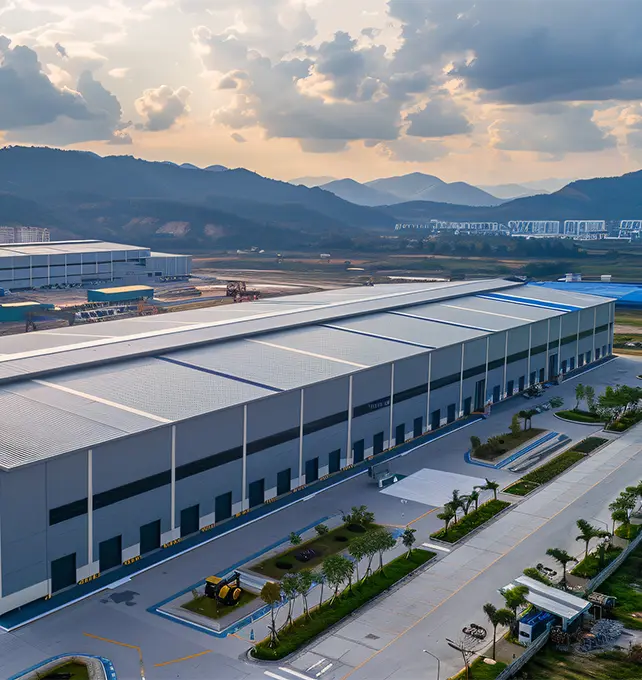

Established on July 15, 2003, and headquartered in the industrial hub of Baoji City, Shaanxi Province, Baoji Mengtai Petroleum Machinery Co., Ltd. (MTPM) shares its home city with BOMCO, the world’s leading manufacturer of land drilling rigs. This strategic location has allowed MTPM to build a comprehensive industrial network, drawing on advanced manufacturing practices, robust material supply lines, and highly specialized engineering expertise.
MTPM is a specialized manufacturer of API-certified petroleum machinery and custom structural components. We were among the first local enterprises to export oilfield hoisting blocks, mud pump replacement components, and custom heavy-duty sheaves. For over two decades, our engineering and manufacturing teams have provided high-capacity components to drilling contractors, mining operators, and oilfield equipment distributors across North America, Europe, the Middle East, Central Asia, and Africa.
By maintaining a strong focus on technical precision and in-house manufacturing control, MTPM delivers high-performance machinery engineered to withstand harsh environments.
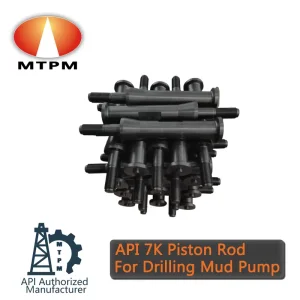
Quality in high-pressure, high-load settings is a matter of operational safety. Since 2014, MTPM has held official API authorizations for key drilling and hoisting specifications. We maintain API Spec 7K certification for mud pump and drawworks components, API Spec 8C for crown block and traveling block sheaves, and API Spec 11D1 for downhole tools. These standards require full material traceability, standardized heat treatment verification, and strict dimensional tolerances.
Field operators cannot afford mechanical mismatches. MTPM specializes in producing high-precision, fully interchangeable replacement components for major drilling brands, including BOMCO, Honghua, RG, Lanshi (LS-NOV), and DFXK. Our parts are machined to the exact dimensional tolerances and material grades as the original equipment, offering field operators a cost-effective, reliable alternative for fleet maintenance.

Authorized Monogram holder for API-7K, API-8C, and API-11D1. Our quality management system undergoes annual audits by the American Petroleum Institute to ensure continuous compliance.
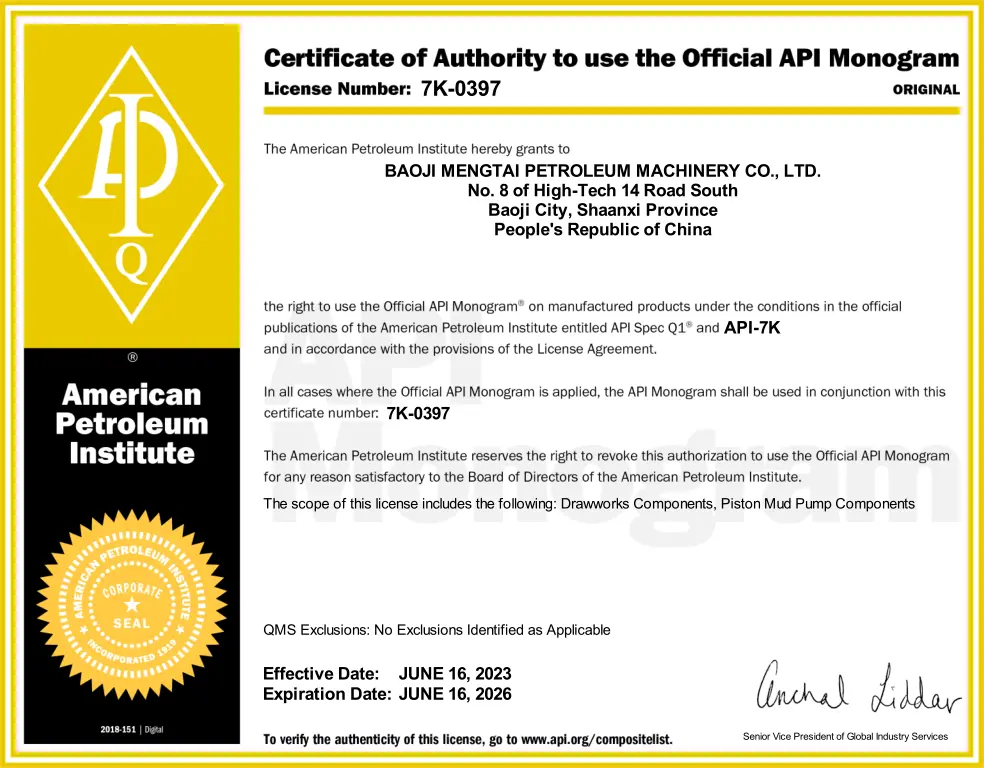
API Spec 7K Certificate
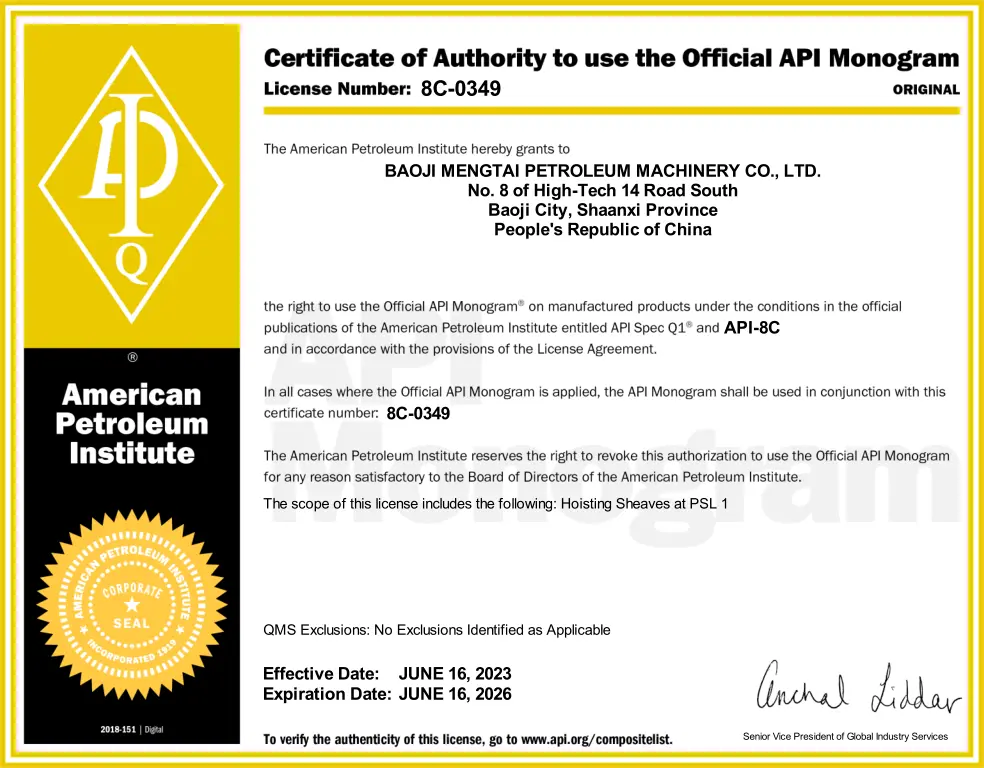
API Spec 8C Certificate
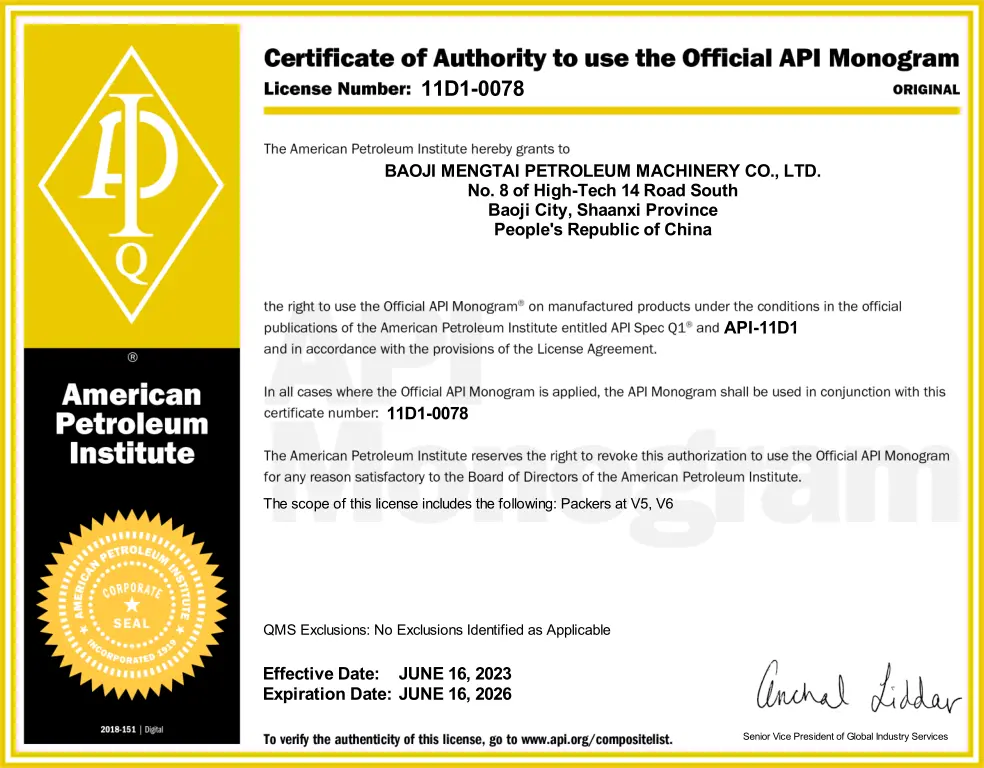
API Spec 11D1 Certificate
Our 5,000-square-meter modern manufacturing workshop is equipped with over 80 advanced CNC machines, heavy vertical boring lathes, and testing systems to ensure that every stage of fabrication remains inside our production control.
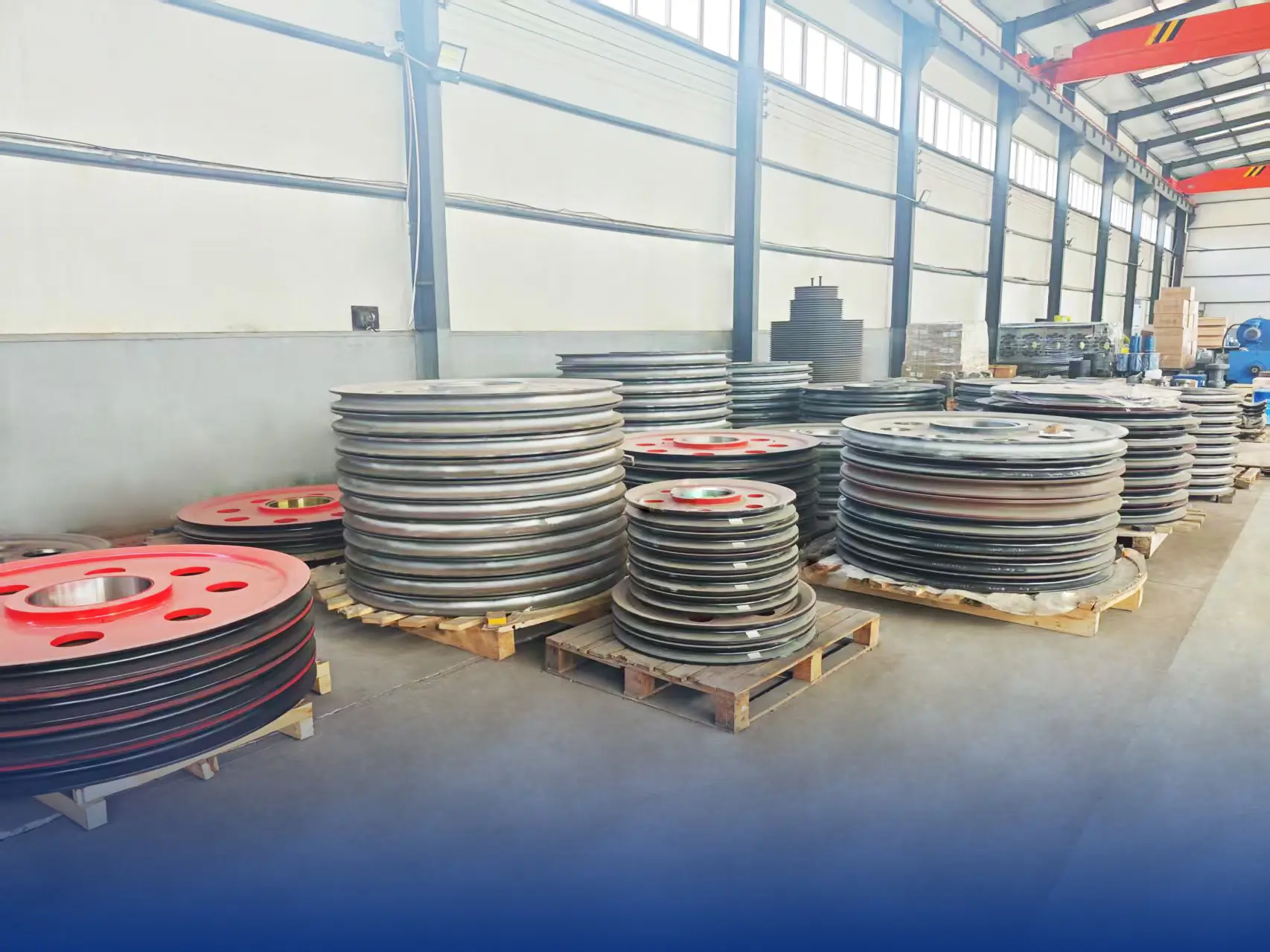
We maintain a large stock of raw forgings and semi-finished sheave bodies to respond quickly to urgent replacement orders, minimizing downtime for global partners.
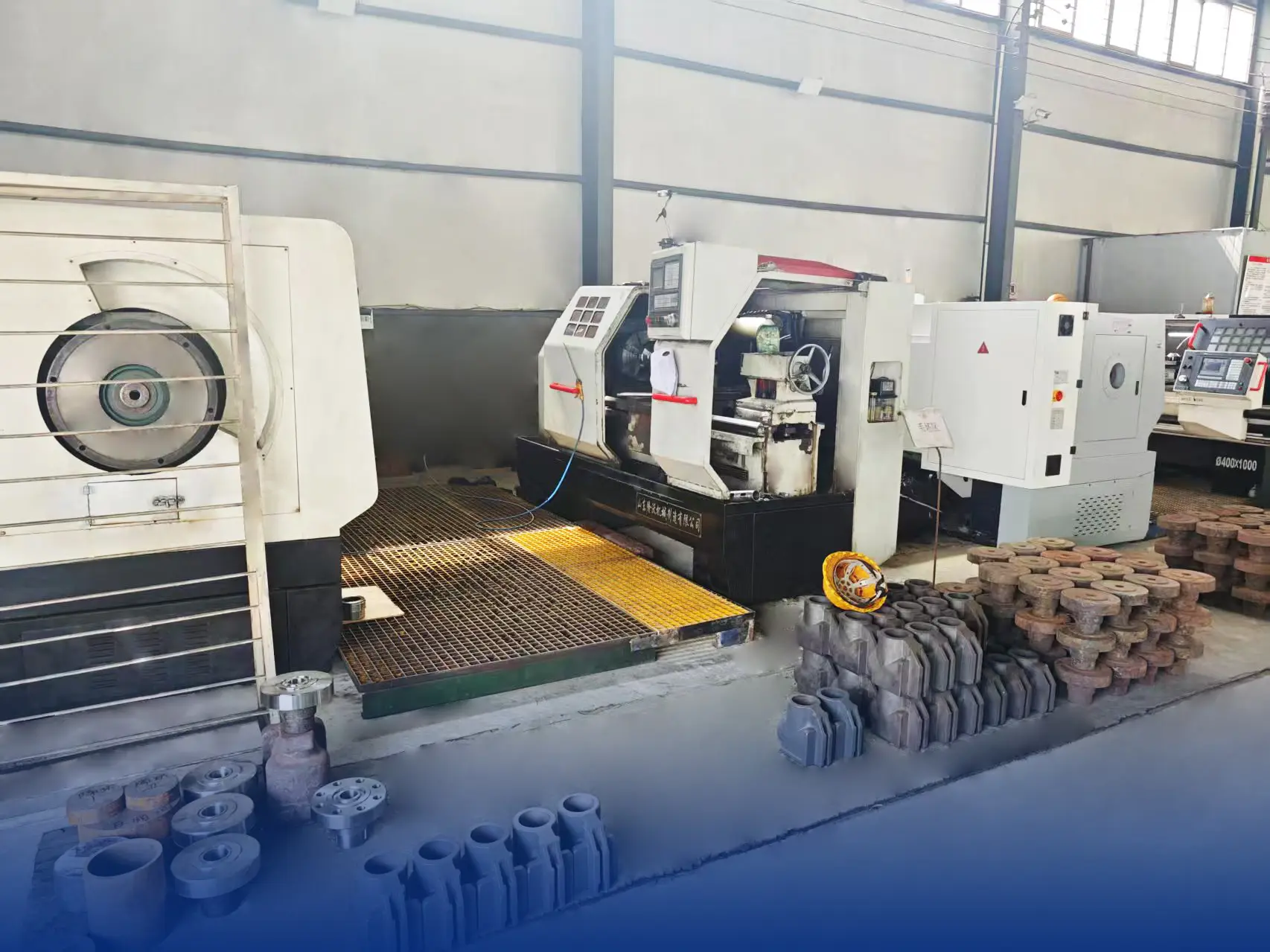
Computerized tooling profiles ensure the precise groove dimensions and radial runout tolerances required by API Spec 8C, reducing wire rope wear.
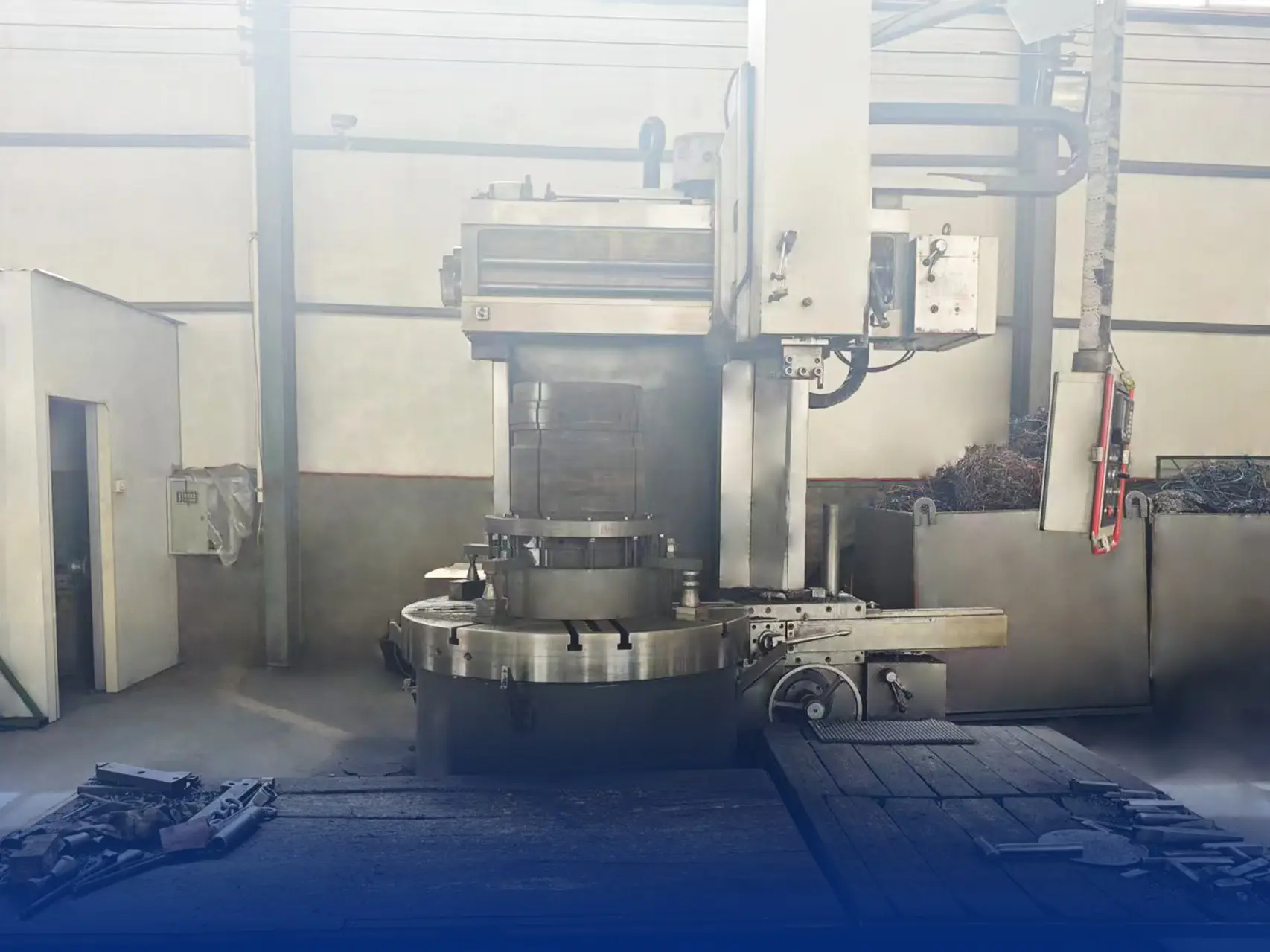
Magnetic particle and ultrasonic inspections detect subsurface flaws, while hardness testing verifies surface resistance on critical wear zones.
MTPM focuses on design, research, and manufacturing innovation for mud pumps, drawworks, and hoisting systems. We utilize advanced process technologies to improve the strength and wear resistance of our structural components. Our engineering team holds 16 proprietary Chinese patents, focusing on design enhancements that prevent premature bearing failure, seal wear, and groove fatigue in traveling and crown blocks.
Our team includes more than ten senior technical professionals with extensive experience in the petroleum machinery sector. Our core production operators and supervisors have been with the company for over 15 years, ensuring consistent craftsmanship and quality control throughout the manufacturing process.
Our components are widely supplied to drilling operations under CNPC and Sinopec in China, and are exported to international markets across the Americas, Europe, Africa, Central Asia, and the Middle East. Through long-term partnerships, we have built a reputation for reliable equipment and technical service.







Operating in environments like the Tarim Basin or Middle Eastern oilfields requires equipment that can withstand high temperatures and abrasive dust. MTPM forged steel sheaves are equipped with contact labyrinth seals to protect internal bearings from sand ingress, ensuring reliable lubrication under heavy loads.
Marine installations face highly corrosive salt-spray environments. MTPM applies anti-corrosive industrial coatings and zinc-plated grease fittings, using high-load capacity double-row tapered roller bearings to handle dynamic offshore movement and wind loads.
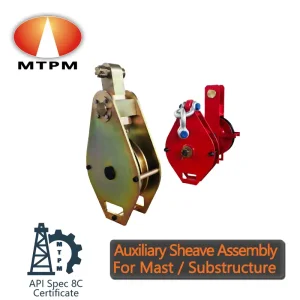
Heavy lifting cranes and mining skip systems demand high safety factors. MTPM's API 8C sheaves are designed for extreme radial forces, featuring deep-groove profiles that support stable cable tracking and reduce wear on high-capacity wire ropes.
Unlike cast steel components, which can contain internal gas pockets or structural irregularities, MTPM uses forged structural steel (typically high-strength carbon or alloy steel grades). The hot forging process refines the grain flow of the steel, improving its fatigue strength, fracture toughness, and impact resistance in cold-weather conditions.
To prevent premature wear from high-tension wire ropes, sheave grooves are induction hardened. We control the heating and quenching process to achieve a surface hardness of HB 250 to 300, while maintaining a tough, resilient core. This prevents deep groove deformation and preserves the profile of the wire rope.
MTPM sheaves utilize high-capacity double-row tapered roller bearings or specialized ball bearings. These configurations are designed to support combined radial and axial thrust loads during rig operations, ensuring stable rotation even during high-impact drilling events.
 MTPM RigParts