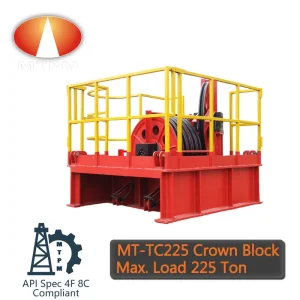
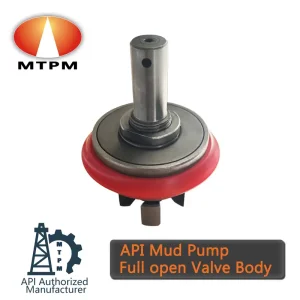
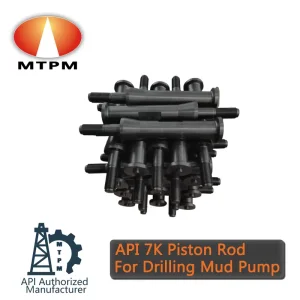
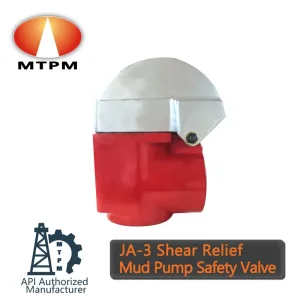
Engineered to endure the severe static and dynamic load conditions of deepwater drillships, semi-submersibles, and land-based heavy drilling rigs operating within Namibian waters and basins.
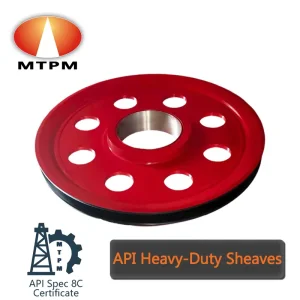
Namibia is rapidly positioning itself as the new frontier of global deepwater exploration. Recent, world-class discoveries in the Orange Basin—such as the Venus, Graff, Jonker, and Lesedi prospects—have drawn massive capital investments from international supermajors. As exploratory drillships and semi-submersible rigs flock to the South Atlantic ocean off the coast of Walvis Bay and Lüderitz, the mechanical reliability of heavy hoisting equipment becomes the single most critical factor determining rig uptime.
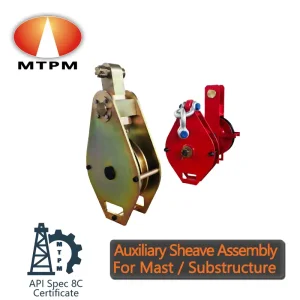
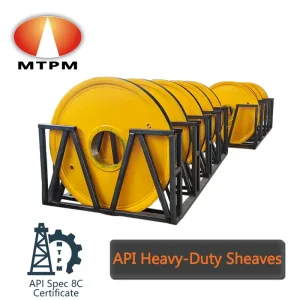
For operations in onshore basins, such as the environmentally sensitive Kavango Basin, geological targets demand deep-reach directional drilling. In these scenarios, high hook loads and excessive hook speeds subject the crown block and traveling block sheaves to extreme fatigue cycles. Standard castings often fall short in these harsh environments, creating an urgent demand for premium API Spec 8C forged steel sheaves and auxiliary sheave assemblies that can guarantee long operational lifespans and zero unplanned structural failures.
Understanding the material science and manufacturing processes behind heavy-duty crown block components determines their survivability under continuous dynamic loads.
MTPM forged steel sheaves utilize high-alloy structural steels, grain-refined via controlled thermal processing. Forging eliminates internal voids, micro-porosities, and dendritic segregations typical of standard cast sheaves, resulting in superior fatigue resistance and tensile yield limits.
All load-bearing hoisting elements conform strictly to API 8C specifications. This includes full structural trace-ability, Charpy V-Notch impact testing at low temperatures (-20°C to -45°C) to prevent brittle fractures, and complete ultrasonic (UT) and magnetic particle inspections (MPI).
Flame or induction hardening is precisely applied to the rope grooves, reaching minimum hardness levels of 35-40 HRC. This limits groove wear, prevents critical wire rope pinching, and dramatically extends the operating lifetime of costly drilling lines.
Established on July 15, 2003, and headquartered in Baoji City, Shaanxi Province, China—sharing the same strategic manufacturing hub with BOMCO—Baoji Mengtai Petroleum Machinery Co., Ltd. (MTPM) is a leading pioneer in the engineering and production of premium-grade oilfield machinery and hoisting components. As one of the earliest high-tech private enterprises in Shaanxi to secure direct import/export authorizations, MTPM has dedicated over two decades to developing robust drilling rig parts and mud pump components for global operations.
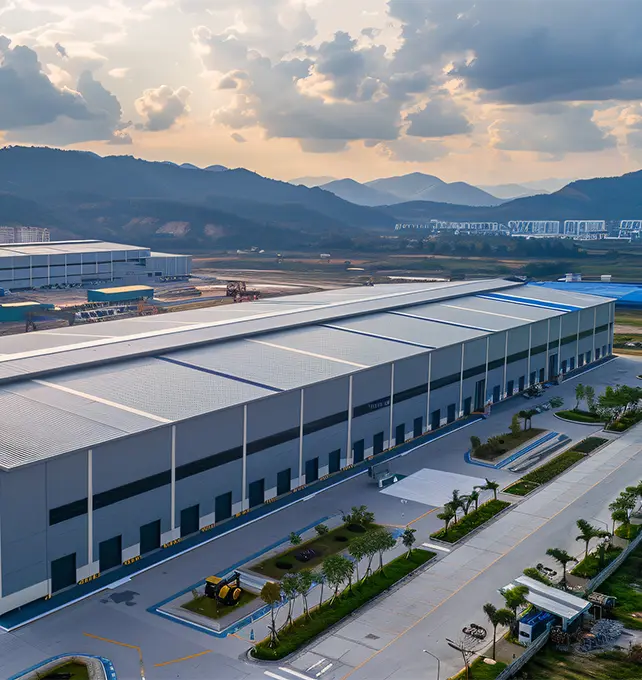
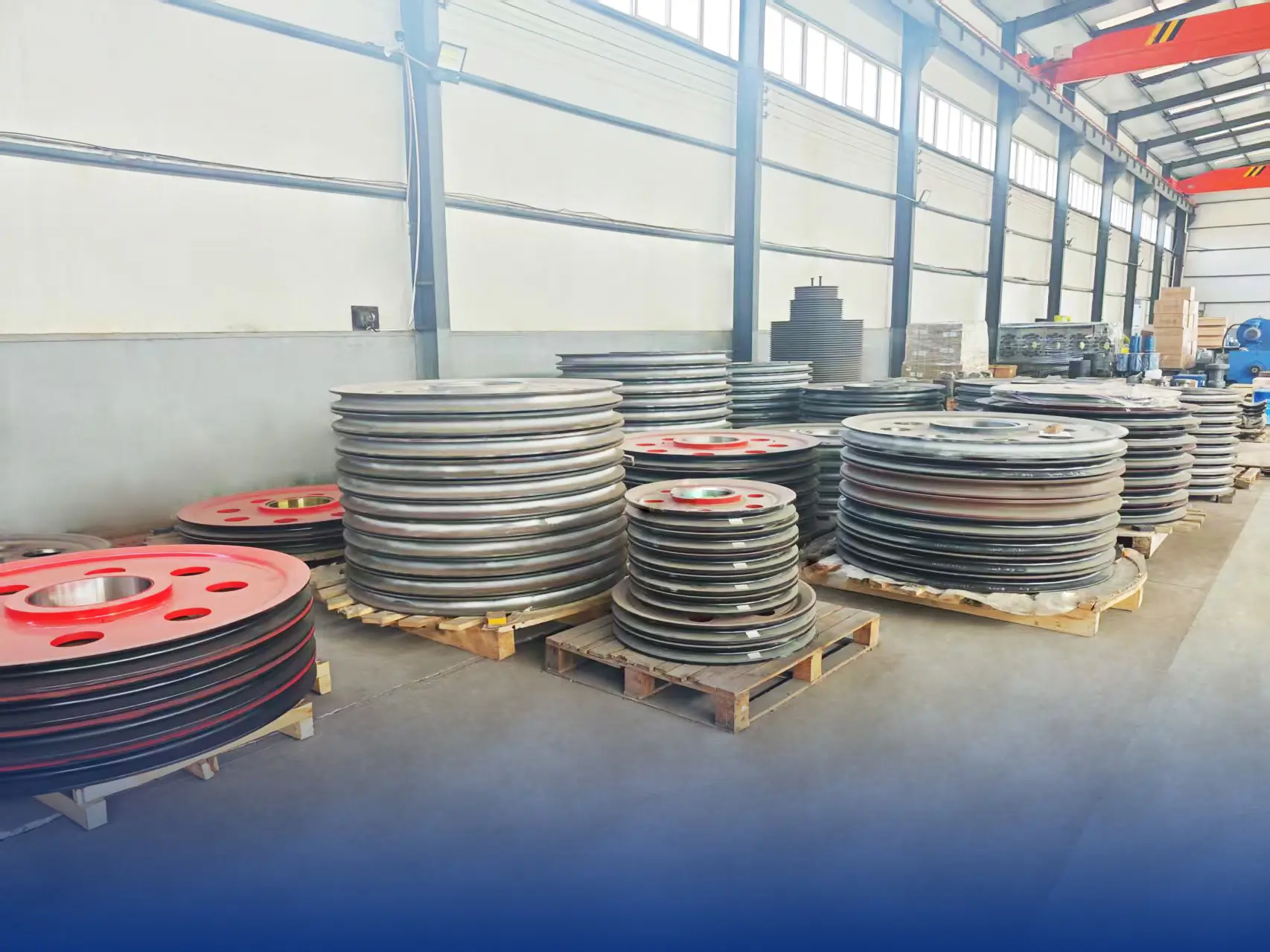
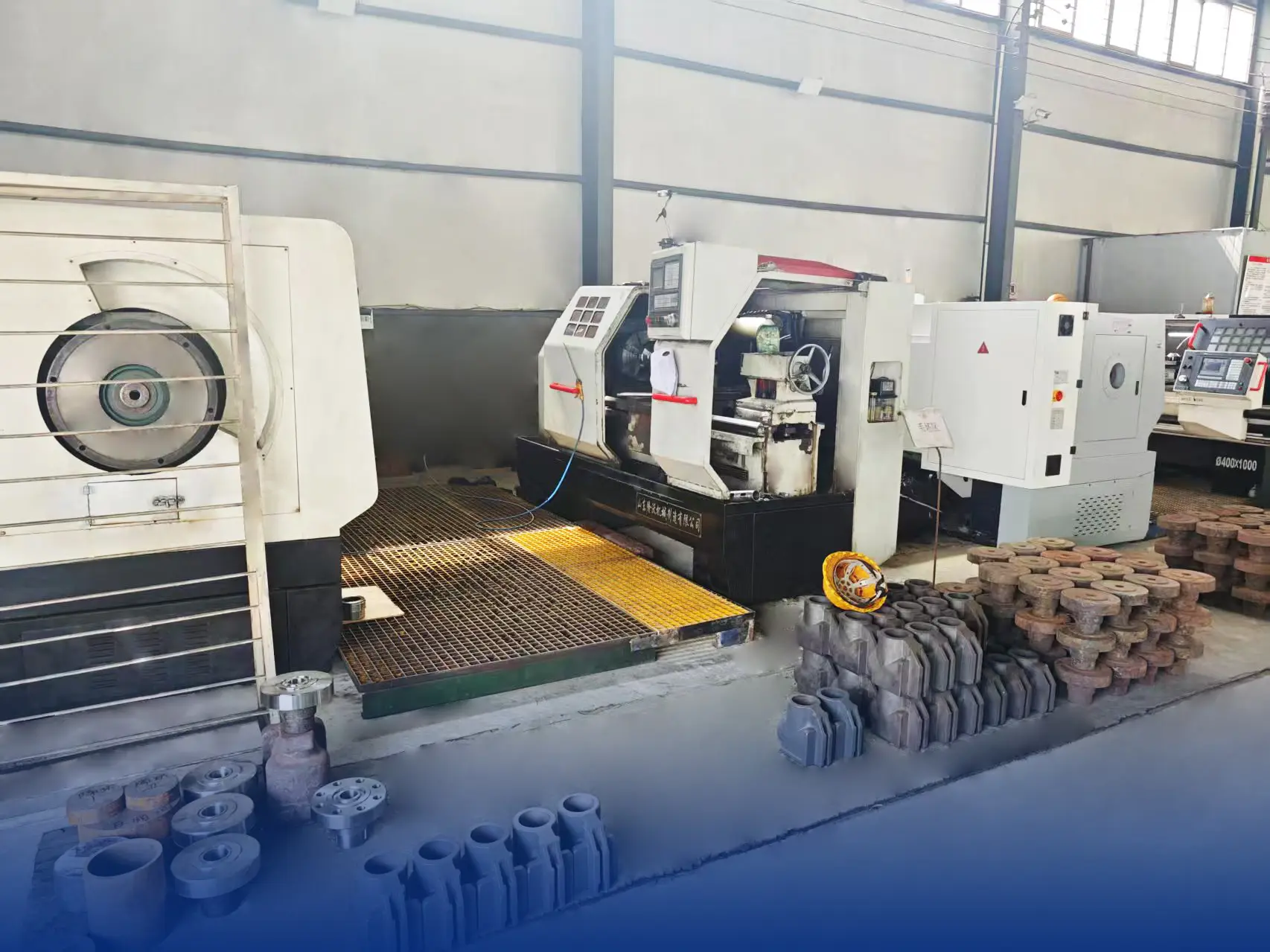
We pride ourselves on our certified manufacturing infrastructure. MTPM operates a fully-owned, standardized 15,000 square meter facility equipped with state-of-the-art CNC lathes, grinding stations, and metallurgical testing laboratories. Since 2014, MTPM has continuously held official API Monogram licenses for API-7K (Mud Pump and Drawworks Components), API-8C (Hoisting Sheaves), and API-11D1 (Downhole Equipment). Furthermore, our core mechanical parts are engineered to be 100% interchangeable with top global legacy brands, such as BOMCO, HONGHUA, RG, LANSHI (LSNOV), and DFXK, providing seamless field replacement capabilities without rig modification.
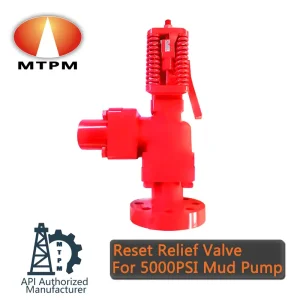
Timely delivery of replacement drilling rig components is crucial to keeping offshore drillships operational. MTPM has established a dedicated logistics workflow to service Namibia's deepwater ports. By routing high-priority replacement parts via established shipping lanes from China to the Port of Walvis Bay and the Port of Lüderitz, we guarantee minimized transit times. Standard sea-freight containers deliver major crown block assemblies, while critical emergency spare parts (e.g., specific bearings, groove sleeves, reset valves) can be air-freighted directly to Hosea Kutako International Airport in Windhoek for rapid customs dispatch.
MTPM is fully aligned with the upcoming Local Content regulations governed by Namibia's Ministry of Mines and Energy (MME). We support joint ventures, local engineering consulting hubs, and skills-transfer partnerships to train local Namibian technicians in the maintenance, NDT verification, and rebuilding of hoisting blocks. Working directly with local engineering firms in Walvis Bay allows us to offer on-the-ground support, ensuring all replacement sheaves match the required rig specifications and local environmental standards.
As offshore exploration transitions toward intelligent, automated drilling rigs, the components of the hoisting system must evolve to meet smart-monitoring requirements. MTPM is actively researching and integrating digital diagnostic solutions to modernize traditional crown block assemblies:
Developing non-contact laser telemetry sensors built directly into the crown block casing. These systems continuously measure the structural profile of the sheave grooves, alerting operators to uneven wear before it causes severe wire rope fatigue.
Integrating wireless thermal and vibration acoustic sensors inside sheave center shafts. These sensors track heat signatures and microscopic mechanical anomalies, feeding live predictive maintenance data to the rig’s central control room.
Adapting grease channels to work efficiently with high-viscosity, biodegradable marine lubricants. This prevents ocean contamination in offshore drilling zones while maintaining optimal friction coefficients under high temperatures.
Get quick answers to common engineering questions regarding the specification, compatibility, and maintenance of crown block components.
Explore our full range of mud pump fluid end parts, drive systems, and structural hoisting machinery built to meet API standards.
 MTPM RigParts